Introduction
Science is not only about reading books and learning answers. Science is also about doing things, watching carefully, asking questions, and finding answers through practical work. At Hill Crown Academy, students get a chance to learn science in a simple and useful way through practical activities. The Science Practical Project Submission at Hill Crown Academy is an important part of school learning because it gives students a chance to use what they learn in the classroom.
A science practical project helps students understand lessons in a better way. When students perform an experiment themselves, they can see what happens in front of them. This makes science more interesting and easier to understand. Instead of only remembering facts, students learn how and why something happens.
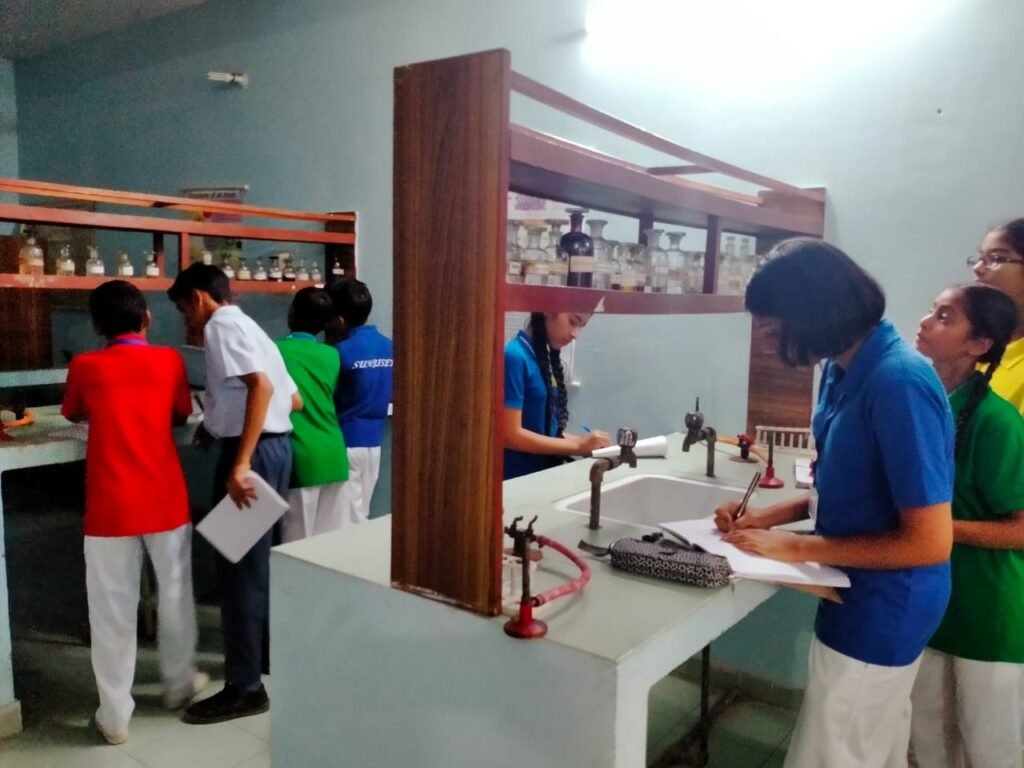
The picture shows students working in a school science laboratory. Students can be seen wearing their school uniforms and working around the laboratory tables. Some students are writing their observations, while others are looking at laboratory equipment and materials. The scene shows teamwork, learning, and interest in science.
The science practical project is also a good way for students to improve their confidence. They learn how to use laboratory equipment carefully, how to follow instructions, how to record results, and how to present their work. These small skills can help students in their future studies.
Importance of Science Practical Work
Science practical work is very important in school education. Reading a chapter can give us information, but practical work gives us real experience. Students can understand a topic more clearly when they perform an activity related to it.
For example, if students read about chemical reactions in a book, they may understand the basic idea. But when they see a safe chemical reaction in the laboratory, they can understand the change more clearly. They may see a change in colour, formation of bubbles, change in temperature, or another visible result.
This is why practical learning is useful. It connects classroom learning with real-life experience.
At Hill Crown Academy, science practical activities can help students develop a habit of learning through observation. Students learn that science is not only about getting the right answer. It is also about asking the right question and finding the answer through proper methods.
Practical work can also make students more interested in science. A laboratory is different from a normal classroom. Students get the opportunity to work with equipment, observe materials, write notes, and work with classmates.
Science Practical Project Submission
A Science Practical Project Submission is a stage where students present the work they have completed during their science practical activities. A project may include the topic, aim, materials, method, observations, result, and conclusion.
Students need to complete their practical project carefully. They should write their work in a clear and simple way. The project should show what they learned and what they observed during the activity.
A good science practical project does not always need to be very complicated. A simple project can also be very useful if the student understands the topic properly.
For a school science project, students can usually follow a simple format:
- Project title
- Aim of the project
- Introduction
- Materials required
- Procedure
- Observation
- Result
- Conclusion
- Safety rules
- Student learning
This format makes the project easy to read and understand.
Learning in the Science Laboratory
The science laboratory is an important place for students. It gives them a different type of learning experience. In a laboratory, students are not only listening to a teacher. They are also watching, doing, writing, and discussing.
The image of students at Hill Crown Academy shows this type of learning environment. Students are working around laboratory tables. Laboratory bottles and equipment can be seen on the shelves. Students are also writing information in their notebooks.
Writing observations is an important part of science practical work. Students should not only watch an experiment. They should also write down what they see.
For example, if a student performs an experiment and notices a colour change, the student should record the original colour and the new colour. If there is a temperature change, the student should write it down. If there is any other visible change, it should be recorded carefully.
These records help students understand the result of the experiment.
Learning by Doing
One of the best things about a science practical project is learning by doing.
When students perform an experiment themselves, they become more active in the learning process. They have to follow steps and pay attention to the result. If something does not happen as expected, they can think about what went wrong.
Learning by doing can also help students remember lessons for a longer time. A practical experience can stay in a student’s mind because the student has actually seen and performed the activity.
For example, a student may read about a simple test for a substance in a textbook. Later, when the student performs the same test in the laboratory, the lesson becomes more meaningful.
This is why practical science education is helpful for school students.
Role of Teachers in Science Practical Work
Teachers have an important role in practical learning. Before students start an experiment, the teacher explains the activity and tells students how to use the equipment.
A teacher also makes sure that students follow science laboratory safety rules.
Students may be excited when they enter a laboratory, but they need to stay careful. Laboratory equipment should be used only as instructed. Students should not touch unknown materials or chemicals without permission.
The teacher can also help students understand their mistakes. If a student gets a different result, the teacher can explain possible reasons.
Good guidance helps students become more confident in practical work.
Teachers can also encourage students to ask questions. Questions are an important part of science. A student should feel free to ask why something happened and how the result was produced.
Importance of Observation
Observation is one of the most important skills in science.
During a science practical, students need to look carefully at what is happening. Sometimes the change may be very small. Students need to pay attention and record it correctly.
Good observation means noticing details without changing them.
For example, students may observe:
- Change in colour
- Change in temperature
- Formation of bubbles
- Change in shape
- Formation of a solid
- Movement of an object
- Change in smell, where safe and appropriate
- Reaction between materials
- Difference before and after an experiment
Students should write observations in simple words. There is no need to use difficult language. The main purpose is to clearly explain what happened.
Importance of Writing a Practical File
A science practical file is useful because it keeps a record of the student’s work. It may contain different experiments and activities completed during the school year.
Students can use the practical file to revise topics before exams. It can also help them remember the steps of experiments.
A practical file should be neat and organized. The title of each experiment should be clear. The aim, materials, procedure, observation, result, and conclusion should be written properly.
Students should also make diagrams when needed. A simple and clear diagram can make a practical project easier to understand.
The project should show the student’s own learning. Students should understand what they write instead of simply copying information.
Teamwork During Science Practical
Science practical activities can also teach students how to work as a team.
In a laboratory, students may work in small groups. One student may handle the equipment, another may write observations, and another may help with the steps.
Teamwork teaches students how to share responsibilities.
The image shows students working together in a science laboratory. Their work reflects a classroom environment where students are learning through practical activities.
Teamwork can also teach patience. Students need to listen to each other and wait for their turn to use equipment.
When students work together, they can discuss what they see. One student may notice something that another student did not notice. By sharing ideas, the group can understand the activity better.
Science Project and Student Confidence
A school science project can help students build confidence.
Some students may feel nervous when they perform an experiment for the first time. They may be worried about making a mistake. With practice and proper guidance, they can become more comfortable.
Completing a practical project gives students a sense of achievement. They can see the work they have completed and understand that they are able to perform scientific activities.
Confidence is important for future education. Students who become comfortable with practical work may find it easier to take part in science activities later.
The aim is not to make every student perfect. The aim is to help students learn from their work.
Science Practical and Real Life
Science is connected to our daily life. Many things we use every day are connected with scientific ideas.
Cooking, cleaning, electricity, water, plants, food, medicines, machines, and transport all involve science in different ways.
A science practical project helps students understand some of these ideas.
For example, students can learn about water purification and understand why clean water is important. They can learn about plants and understand how they grow. They can study simple forces and see how objects move.
When students connect science with daily life, the subject becomes more useful.
Science is not limited to a laboratory. The knowledge gained through a science practical can help students understand the world around them.
Science Experiments for Students
There are many simple experiments that can be used for school learning. The experiment should always be suitable for the student’s age and should be done under teacher guidance.
Some simple areas for a science practical project include:
Water Testing
Students can learn about clean and dirty water through simple observation and safe testing methods. They can compare different water samples and record their observations.
Plant Growth
Students can observe how plants grow under different conditions. They can record the height of plants over several days.
Air and Pressure
Students can perform simple activities to understand that air takes up space and can create pressure.
Light and Shadows
Students can study how light creates shadows. They can change the position of an object and observe how the shadow changes.
Magnetism
Students can test which objects are attracted to a magnet. They can make a simple observation table.