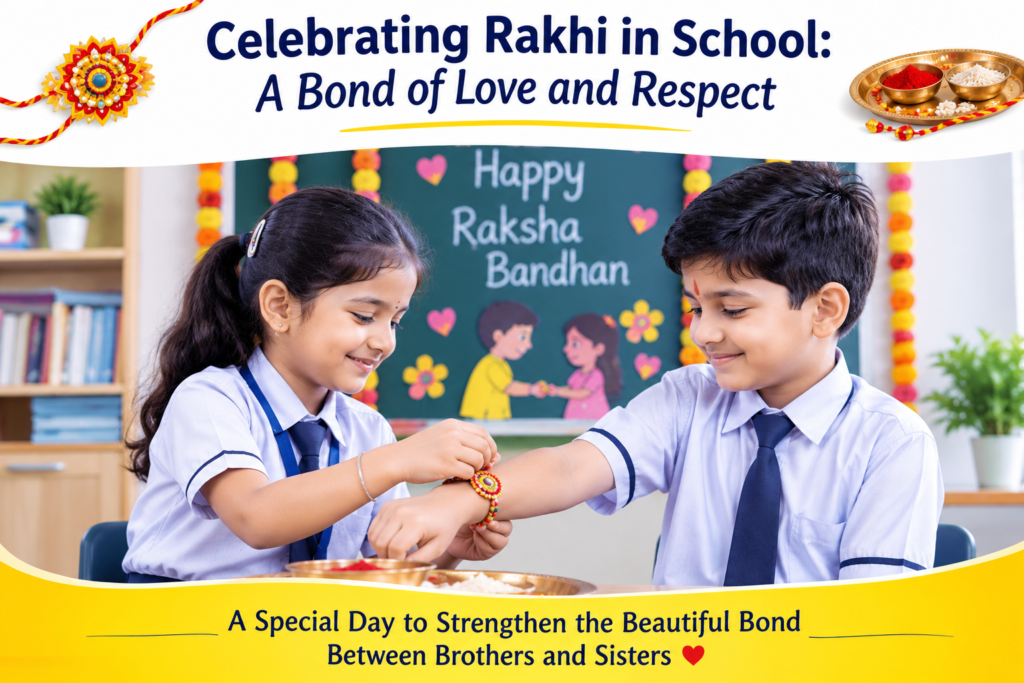
Raksha Bandhan, also called Rakhi, is one of the most loved festivals in India. It is a special day that celebrates the beautiful bond between brothers and sisters. On this day, sisters tie a rakhi on their brothers’ wrists and pray for their happiness and well-being. Brothers promise to care for and support their sisters. The festival is not only about tying a thread. It is about love, care, trust, respect, and family.
Schools also play an important role in making children understand the meaning of festivals. Celebrating Rakhi in school gives students a chance to enjoy the festival with their friends and teachers. It also helps them learn about Indian traditions in a simple and enjoyable way. A school celebration can fill the campus with happiness, colors, smiles, and the feeling of togetherness.
A Special Celebration at School
A Rakhi celebration at school can be a wonderful experience for students. The classrooms can be decorated with colorful paper flowers, handmade rakhis, drawings, and small posters. Students can bring their handmade rakhis and display them in the classroom. Teachers can also explain the importance of Raksha Bandhan before the celebration begins.
The school can arrange different activities for students. Younger children may enjoy making simple rakhis with colorful threads, beads, paper, and small decorations. Older students can take part in drawing, writing, storytelling, singing, or speech activities. These activities make the celebration interesting and give every student a chance to participate.
The best part of a school Rakhi celebration is that children learn while having fun. They do not simply read about the festival in a book. They see the traditions, take part in activities, and understand the feelings behind the celebration.
Understanding the Meaning of Rakhi
Rakhi is often described as a festival between brothers and sisters, but its meaning can be much wider. At its heart, Rakhi is about caring for another person and showing respect and love.
The rakhi is a small thread, but it carries a big message. When a sister ties it on her brother’s wrist, it represents affection and good wishes. The brother also expresses his love and promises to stand by his sister. Today, the meaning of Rakhi has become even wider. Brothers and sisters can celebrate the day by showing care for each other, spending time together, helping each other, and sharing happy moments.
Students can learn that relationships become stronger when people respect one another. Love is not only shown through gifts. It can be shown through kind words, helping hands, understanding, and being there when someone needs support.
Handmade Rakhis Bring More Joy
One of the most enjoyable activities during a school Rakhi celebration is making handmade rakhis. Students can use simple materials to create beautiful designs. Colored threads, ribbons, beads, paper flowers, small mirrors, wool, and decorative pieces can be used to make rakhis.
Making a rakhi by hand teaches children that something made with love can be more special than something bought from a shop. Students also get an opportunity to use their creativity.
Teachers can organize a small handmade rakhi activity in the classroom. Each student can make a rakhi and explain its design to classmates. Some children may make simple rakhis, while others may create colorful and creative patterns. There does not need to be a competition. The main purpose can simply be to enjoy the activity and learn something new.
This activity also encourages children to value handmade things. It teaches patience because students have to carefully put together the threads and decorations. They also learn to keep their work neat and clean.
The Joy of Sharing
Sharing is an important part of every celebration. During Rakhi, students can learn that happiness becomes greater when it is shared with others.
Children can share sweets with their classmates. They can give handmade cards to their friends and teachers. They can write small messages about friendship, kindness, and respect. Such simple activities can make the school environment warm and friendly.
Teachers can encourage students to share with everyone rather than focusing only on their closest friends. A student who feels shy or left out can also become part of the celebration. This teaches children that festivals are a time for everyone to come together.
The celebration can also remind students that kindness does not cost anything. A smile, a kind word, or helping someone with their work can make another person happy.
Rakhi Celebration in the Classroom
A classroom can become a colorful place during Rakhi. Students may decorate the walls with drawings of rakhis, flowers, diyas, and family pictures. A small corner can be created where students can display their handmade rakhis.
Teachers can begin the celebration with a short talk about Raksha Bandhan. They can explain why the festival is celebrated and how traditions may be different in different families.
After the introduction, students can take part in different activities. A few students can recite poems, while others can tell a short story about brothers and sisters. Some students can sing songs related to family and love.
The activities do not need to be difficult. Simple activities often make children more comfortable and happy. The main goal should be to create a positive experience.
A Day Filled with Smiles
School celebrations become special because children enjoy spending time with their classmates. On Rakhi, the atmosphere can be full of excitement. Students may come to school wearing traditional clothes or small festive accessories. Classrooms can have bright decorations, and teachers can also join the celebration.
The sound of laughter and friendly conversations can make the day memorable. Students can take pictures with their handmade rakhis and decorations. They can share sweets and talk about how they celebrate Rakhi at home.
Every family has its own way of celebrating the festival. Some families have a small puja at home. Some prepare special food. Some visit relatives. Some brothers and sisters exchange gifts. Listening to different experiences helps children understand and respect different family traditions.
Learning About Family Values
Schools are places where children learn many things apart from their regular subjects. Festivals provide a natural way to teach values.
Rakhi can help children understand the importance of family. Family members support each other during good and difficult times. Children can learn that respect should be given to everyone, including parents, grandparents, brothers, sisters, teachers, friends, and people who help us every day.
The festival can also teach responsibility. A brother’s promise to protect his sister should not only be understood as physical protection. It can also mean supporting her dreams, respecting her choices, helping her when needed, and treating her with kindness.
In the same way, sisters also care for and support their brothers. The bond works both ways. Both people in a relationship have responsibilities toward each other.
Rakhi and Friendship
Rakhi can also teach children about friendship. Friends may not be related by blood, but a good friend can provide support, care, and encouragement.
During a school celebration, students can make friendship bands or cards for their classmates. They can write simple messages such as “Thank you for being my friend” or “Always stay happy.”
These small gestures can help children understand the value of good relationships. A friend who helps during a difficult time can be as important as someone who celebrates a happy moment with us.
Schools can use Rakhi celebrations to encourage students to be kind to one another. Children can learn not to tease others, not to make anyone feel left out, and to help classmates whenever possible.
Respect for Indian Traditions
India is known for its many festivals and traditions. Each festival has its own story and meaning. Raksha Bandhan is one of the festivals that teaches the importance of relationships.
Celebrating such festivals at school helps children learn about Indian culture. They understand why people follow certain traditions and how these traditions have continued for generations.
At the same time, students can learn that traditions may change with time. Today, Rakhi is celebrated in many different ways. What remains important is the feeling of love and respect.
Schools can make these lessons simple. Children do not need long explanations. A short story, a classroom activity, or a conversation with a teacher can help them understand the deeper meaning of the festival.
Making the Celebration Eco-Friendly
A school can also use Rakhi as an opportunity to teach students about caring for nature. Instead of using plastic decorations, students can use paper, cotton, wool, leaves, flowers, and other simple materials.
Handmade rakhis can be made without unnecessary plastic. Students can also reuse old craft materials from previous school activities.
An eco-friendly celebration can be both beautiful and responsible. It teaches children that festivals should bring happiness without creating too much waste.
Teachers can explain that taking care of the environment is also a form of responsibility. Just as we care for our family and friends, we should care for the world around us.
The Role of Teachers
Teachers have an important role in making school celebrations meaningful. They guide students, explain traditions, organize activities, and make sure everyone gets an opportunity to participate.
A teacher can begin the Rakhi celebration with a simple story about the festival. After the story, students can discuss what love and respect mean to them.
Teachers can also encourage students to share personal experiences. One child may talk about celebrating Rakhi with an older brother, while another may talk about celebrating with a cousin. Some children may not have a brother or sister. They should also feel included.
The celebration should never make a child feel different or uncomfortable. The focus should be on love, friendship, respect, and togetherness.
Including Everyone in the Celebration
A school is a place where children from different families and backgrounds learn together. Therefore, celebrations should be welcoming to everyone.
Not every student celebrates Rakhi in the same way. Some students may have brothers and sisters, while others may not. Some may celebrate with cousins or close family friends.
The school can keep the celebration open to everyone by focusing on the larger message of caring and respect. Students can make rakhis for classmates, friendship bands, or cards with positive messages.
This makes the celebration more inclusive. Every child can participate without feeling that they have to follow one particular family tradition.
Fun Activities for Rakhi
There are many simple activities that can make Rakhi celebration enjoyable in school.
A rakhi-making activity is one of the easiest options. Students can create their own designs using colorful materials.
A drawing activity can also be organized. Students can draw a picture showing brothers and sisters celebrating Rakhi.
A short speech activity can give older students a chance to speak about the importance of family.
Storytelling is another good activity. Teachers or students can tell a simple story about love, kindness, and relationships.
A classroom decoration activity can allow students to work together. Instead of decorating alone, small groups can create different sections of the classroom.
Schools can also organize a small cultural program with songs, poems, and short performances. These activities can make the day enjoyable without making the celebration too complicated.
Sharing Messages of Love
A beautiful part of Rakhi is the messages people share with one another. Students can write small notes for their brothers, sisters, friends, or family members.
The messages can be simple:
“Thank you for always being there.”
“Stay happy and keep smiling.”
“You are special to me.”
“I will always support you.”
These words may look small, but they can make someone feel loved and valued.
Teachers can create a “Wall of Love and Respect” in the classroom. Students can write positive messages on colorful paper and place them on the wall. By the end of the day, the wall can become a collection of kind thoughts.
The Importance of Love and Respect
Rakhi reminds us that love and respect are important in every relationship. A relationship becomes strong when people listen to each other, understand each other’s feelings, and treat one another well.
Children learn these values from their families, teachers, and friends. School celebrations can strengthen these lessons.
Respect also means allowing others to have their own opinions and choices. Children can learn to disagree politely and solve problems peacefully.
The festival is therefore not only about one day. The values connected with Rakhi can be practiced every day at school and at home.
A Memorable School Experience
A good school celebration does not need to be expensive. It does not need a large stage or many decorations. The most important part is the feeling created among students.
A simple classroom, handmade rakhis, a few flowers, some sweets, and happy faces can be enough to create a memorable day.
Students may remember the small moments for many years. They may remember making a rakhi with their friends, laughing during a classroom activity, receiving a handmade card, or listening to a teacher’s story.
These experiences become part of school memories. Festivals give students moments that are different from their normal school routine.
What Children Can Learn From Rakhi
Rakhi teaches many simple but valuable lessons.
Children learn to care for others. They learn that family relationships need love and understanding. They learn to respect traditions while also accepting different ways of celebrating.
They learn that handmade gifts can have special value. They learn to share happiness with others. They learn that friendship and kindness are important.
Most importantly, they learn that relationships become stronger through small acts of care.
A brother does not need to wait for Rakhi to support his sister. A sister does not need to wait for the festival to show love to her brother. Friends do not need a special day to help each other.
The real message of Rakhi is something that can be followed throughout the year.
Rakhi Beyond the School Celebration
Once the school celebration is over, students can take the message of Rakhi home. They can spend time with their family and talk to their brothers and sisters.
They can help their parents with small tasks. They can share food with family members. They can call a relative they have not spoken to for a long time.
These simple actions can make family bonds stronger.
Students can also continue showing kindness at school. They can help a classmate who is having difficulty with a lesson. They can include someone in a game. They can share their things when appropriate.
In this way, the meaning of Rakhi continues beyond the festival.
Conclusion
Celebrating Rakhi in school is a beautiful way to bring students together and teach them about love, respect, care, and family values. The festival creates a happy environment where children can learn about Indian traditions while enjoying creative activities with their friends.
From making handmade rakhis to sharing sweets, from decorating classrooms to writing kind messages, every small activity can carry a meaningful lesson. Students learn that relationships are precious and that love should be expressed through actions as well as words.
Rakhi is more than a colorful thread tied around a wrist. It is a reminder that people should care for one another, support one another, and respect one another.
A school Rakhi celebration can therefore become more than just a festive event. It can become a day of learning, friendship, kindness, and happiness.